NQR

Featured

Welcome to the NQR blog... the rantings and musings of my experience as one of the “Not Quite Retired” (NQR) generation – the 75 million-or-so, U.S. baby boomers.

I’m right in the middle of the boomer demographic, born in 1957.  About half of the 75 million are in front of me, and the other half are right at my heels.  It has been an undercurrent throughout my life.

Being in the middle of this pack provides me with a good perspective from which to share the experience as this generation moves towards some traditional definition of “retirement age”.  With the NQR blog, I aim to do that – and give a voice to the hopes, joys, frustrations, and concerns of this generation; a chance to rant a bit; and an opportunity to dream a lot.

Mix in my left-coast interpretation of the world today and my inter-racial gay partnership, and there’s a lot of ground to cover.

I hope you’ll join in the conversation, regardless of your perspective.

Cal

It’s My Urban Garden Respite, Now Get Off of My Lawn!!!

Living in the craziness of San Francisco, you need a quiet space to chill out, unwind and find your inner peace. There’s only so many hipsters, hippies, and dot-com millionaires one can take in a day on top of everything else that’s going on in the world.  It’s hard to find that space inside your home in San Francisco because the luxury of space isn’t readily available at a $1,000 per square foot.  So you tend to look for some respite outside of your house cubicle.

Of course, that’s not so easy here either.   Cafes and coffee houses are filled with the same hipsters who use them as their rent-free office space, writing their own blogs, I suppose.  Parks are often filled with homeless camping or dot-com millionaire kids on play-dates and in SUV baby carriages.  Going for a walk can be nice, unless you don’t feel like hiking back up the 1,000 foot hill with a sidewalk that consists of a 4-block staircase.  Because land is at a premium on the 7 mile x 7 mile peninsula that constitutes San Francisco, not many homes have much of a yard here.

We fortunately do, and it’s one of the places where I try to find some respite when things are crazy. I spent a couple of years taking landscape architecture classes which gave me a lot of ideas, much less so the practical skills to actually implement them.  But I try.  I’ve created different outdoor rooms, on different levels to deal with the sloping hill terrain; and built a river-rock stream to connect different spaces. There’s two outdoor eating areas, one for the sun, the other more shade, and another small conversation area with a fire-pit in the center.  We’ve built raised garden beds with strawberries, tomatoes, peppers, herbs, and lettuce.  I turned a couple of galvanized metal water troughs into additional growing areas for snap peas and raspberries.  It is accented with multiple flower pots at key spots for a burst of color.  We’re surrounded by an amazing number of trees for a small city lot including Japanese maple, palms, gingka, lemon, and apple. There are monarch butterflies galore, flocks of hummingbirds, even our friendly, adopted neighborhood cat named Bubba – who should really pay rent for his deck space with the city views.

Some of my favorite moments with Joe are sharing lunch together on a sunny day in the middle of our little urban oasis.  There is no cafe or park that would come close. It’s just us in a private urban paradise.  It’s got a few weeds, and often looks short on the maintenance, but it never fails to refresh the soul and my spirits. Just stay off of my lawn.

This slideshow requires JavaScript.

Ninety-niners

One percent of our population constitutes the plutocracy in this country who control Wall Street investment firms, the banks, the mortgage industry, the insurance industry, and other major global corporations. They buy influence in Washington through the auction-house called Congress.

Over a few decades, the mega-wealthy have managed to stack the deck in their favor through successive bits of legislation, litigation, changes to regulatory practices and the tax code. This manipulation has resulted in the distribution of income in the US becoming  lopsided in their favor, the most inequitable since 1928, just before the Great Depression. (Ref: Economic Policy Institute, Analysis of CBO Data).   Because of the deregulated environment constructed via their influence, they were able to create a financial house of cards, take as much as they could reap from it; and then – when it collapsed, come back to the Federal trough to get bailed out. All while being praised as job creators.

What a business model: use the baby boomers mega savings in 401K accounts as the capital to fuel it, privatize the mega-profits, democratize the losses;  and oh, by the way – too bad for the boomers retirement savings screwed over in the process.

The result of all this is that today we live in a society made for them, not for us.  It’s their world, not ours. If we’re lucky, they’ll let us work in it so long as we don’t question the extent of their charity.  But if something doesn’t pass muster with this elite “virtual plutocratic senate”, it either isn’t going to happen, or it will be shut down through divisive tactics, manipulation, or unfavorable attributions like a “mob action”, “un-American”, “class-warfare”.  Sound familiar?

But the other 99 percent in this country has finally decided that it will no longer be silent.  As I first wrote here on September 25, a small group began to assemble on Wall Street to let the 1 percent know just how frustrated they are with living in a world made for someone else.  It was started largely by our disenfranchised youth, always an early warning indicator that trouble may brew ahead.  Look at Egypt with a youth-unemployment rate at about 25%, on par with the rest of the Middle East and Northern African (MENA) countries where we have witnessed the Arab Spring.  In the West, Britain has a youth unemployment rate of 20% and Spain is on the order of 40%. (Source: The Economist, Schumpeter Business & Management, February 2011)  The US is in the same league, so don’t let American hubris cause you to think we’re any different.  Arab Spring, American Autumn.  

The Occupy Wall Street movement (can we call them the “Z” party – based on their Zuccotti Park home base?) has grown and continues to do so. “We are the 99 percent” is the creed, and every city is sprouting its own rendition – Occupy SF Occupy Omaha, Charlotte, Los Angeles, etc.  What was three weeks ago a group of mostly young people camping out on the streets has morphed into something different: a movement for people of varying ages, life situations and grievances.  Unions of teachers, transportation workers, manufacturing occupations and nurses are joining in.  Baby boomers are joining too, while trying to reconcile how we’ve gone full circle from hippie movements of the 1960s and ’70s to “Zippie” movements forty years later.

The common denominator is that the majority in America — the “99 percent”, isn’t getting a fair shake.  The 99 percent is not a “mob”, “un-American”, or a radical group of misfits. It is us, just looking for a fair shake.  We, the NQR generation, should realize this more than anyone because we have experienced a better America.  We have every reason to get involved and drive change.  It’s the right thing to do. 

Economic Policy Institute

https://i0.wp.com/www.stateofworkingamerica.org/files/images/orig/Family-Income_Household-income-growth_income-group_pre--and-post-tax_3.png

International Escape

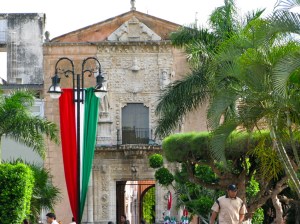
I first went to Mérida, Yucatán México 35 years ago on a bus from Tehuacán, Puebla – during the time I was an exchange student in high school.  Captivated by the colonial city, Mayan history, and nearby beaches with a series of quintessential fishing villages, I didn’t want to leave.  But college beckoned in New York, then onto an MBA, and soon, a 30-year career ensued. I retained the dream of having a home in México someday.

Then in 2007, I started to explore the possibilities of retiring abroad – at least on a part-time basis – to enjoy a slower pace of life, different experiences; and not least of all, help offset the financial requirements of retiring sooner or pursuing Career 2.0.

I checked out Costa Rica, Panama, Uruguay, Argentina, Brazil, and a few other places too.  International Living (www.internationalliving.com) became an on-line fascination.  When I was staying in Bocas del Toro (Panama), I read a book called Don’t Kill the Cow Too Quick: An Englishman’s Adventures Homesteading in Panama”, by Malcolm Henderson.  The book captures the essence of the adventure that awaits in moving abroad, and motivated me to delve further.

Explore the Web, and you’ll find a whole industry devoted to retirees looking to live under tropical skies with daily maid service, affordable healthcare, houses and apartments at the beach, in colonial cities, or quaint mountain towns.

The U.S. State Department estimates some 4 million Americans live abroad, not counting military and embassy personnel, with 500,000 to 1 million just south of the border in Mexico alone. About a quarter of those are estimated to be retirees.

From a financial perspective, spending time overseas is certainly tantalizing.  The cost of living can be low enough to retire years earlier than otherwise possible.  We know people in Mexico who live very well on $2,000 USD per month, and others who make it work with less because they’re willing to forego imported goods and adopt a simpler lifestyle.

From my experience living/working abroad I’d say that if you’re the kind of person who is motivated just by the financial aspects, then retiring abroad probably isn’t the right thing to do. You need to be desirous of a different lifestyle, crave some adventure, and embrace the cultural variety. If you’re not open-minded, flexible, tolerant and patient, or have an attitude that “Amurka” does it best, then you probably shouldn’t even consider it.

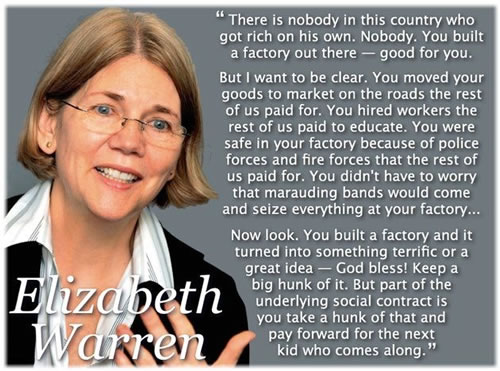
Elizabeth Warren – Heroine of the NQRs

I think Elizabeth Warren is the single voice of reason and the best person we have running for political office to represent the interests of the middle class and the NQR generation. She gets it.  It is all about our underlying social contract.

Elizabeth Warren on the Class Warfare Topic on Youtube

Marga Gomez – Not Getting Any Younger

This past weekend, Joe and I went to see Marga Gomez in her one-woman comedy show called “Not Getting Any Younger” at The Marsh Theatre in San Francisco.  It was, without a doubt,  one of the most hilarious and entertaining shows that I have seen in a very long time.  If you have a chance to catch this before it closes October 23, I’d really urge you to do so.  I’m still laughing about the story of putting up with a young salesclerks calling her Ma’am, driving her toward murder at a Forever 21 department store.

Marga Gomez’s
NOT GETTING ANY YOUNGER
September 8 – October 23!
The Marsh, San Francisco Studio

“This is Gomez at the top of her game.” San Francisco Chronicle

“Gomez has the audience in hysterics” Doug Konecky SF Theater Blog

Amazing. She’s like a lesbian Lenny Bruce Robin Williams

Hysterical! Adore her! Eve Ensler, author Vagina Monologues

” Deliciously Cheeky …One To Watch” – New York Times

Social Security – An Entitlement?

I’m part of the boomer demographic (< 55 years old) for whom Congress has discussed changing the rules of Medicare and Social Security.   Are you kidding me?  There is nothing that gets me (and every other boomer) riled up as much as even having this discussion.

I have contributed to SSI/Medicare through payroll taxes every paycheck for 38 years since my first job in high school.  My employers have contributed an equal percentage.  Today the rate is 15% of gross income before taxes, up to the maximum threshold which increases each year – split between employee/employer.  If you’re self-employed, you pay the whole thing.

If you averaged only $30K per year income over a 49 year working life, that’s close to $220,500 in contributions made.  If you calculate the future value of $4,500 per year (yours & your employer’s contribution) at a simple 5% (less than what the government pays on the money that it borrows), after 49 years of working, you’d have $892,920.

If you took out only 3% per year, you would receive $26,787.60 per year and it would last better than 30 years.  If you bought an annuity and it paid 4% per year, you’d have a lifetime income of $2,976.40 per month.

The folks in Washington have pulled off a bigger Ponzi scheme than Bernie Madhoff ever had. Entitlement?  Are you kidding me?  We have all paid cash for our social security insurance.  Just because they borrowed money from the fund, doesn’t mean the solution is to cut our so-called “entitlement”!

There are a lot of other ways to solve this matter proposed by many economists – such as Robert Reich (UC Berkeley), Paul Krugman (Princeton prof and NY Times columnist) and others.  It’s time Congress started listening to them, instead of Grover Norquist.

The Reality Upon Us

I think a lot boomers are living in fantasy-land when it comes to the realities of a retirement without earning supplemental income.  We’ve always been about living in the now.  But If you’ve estimated how much income you’ll need to maintain your standard of living after you retire — and how long that income must last with our extended life expectancy,  it’s a pretty daunting revelation.

For a 55-year-old who earns $150,000 a year, planning to retire at 65 on 80% of current salary, and looking for that income to last until age 95 (who knows) – the number is, shockingly, around $3 million – if you assume a 4% annual withdrawal rate. I’m excluding social security, any pensions, and any home equity you can take out when you downsize (good luck with that).   I’m also not including taxes on the IRA withdrawals (which you have to pay on your gains unless it’s a Roth IRA).

I know $150,000 is a lot of money in many parts of the US, but in the SF Bay area it’s enough to live a solid middle-class lifestyle, where the median home price is in the $650K range and gas is $4.20 a gallon.  But if you think that’s crazy and you can get by on half of that amount, or $75K a year, you’ll still need a cool $1.5 million.  If you’re in some other area of the country where the cost of living is even lower, then maybe you can cut it in half again, and get by with a mere $750K target in your nest egg.   Having that amount might give you about $30K total income per year – again excluding social security, pension (if any) and taxes.

And how do we stack up against that?   Here are a few enlightening measures (from various sources noted) to give a general picture:

  • 36 percent of Americans say that they don’t contribute anything to retirement savings beyond their social security (Employee Benefit Research Institute, Washington DC)
  • Only about 15 percent of Americans currently have a traditional pension plan, according to the Employee Benefit Research Institute.
  • The average 401K balance is about $72,000.  (Money Magazine, October 2011)
  • The average homeowner now has 38 percent equity, down from 61 percent a decade ago according to the Federal Reserve (June 2011).   If your home is worth $250K, that’s about $95K in equity, assuming you can sell and cash out without using that money for somewhere else to live.

We need to get real, or plan to live on a lot less.

http://money.cnn.com/magazines/moneymag/retirement_guide/

Wall Street and the Boomers

After the demise of company pensions in all but a few union industries, I had to take responsibility for my own retirement planning and saving, like most of the baby boomer generation.  I have regularly contributed to the max in my 401K. We also used to receive a company match – but that went out the window in cutbacks by my employer a couple of years ago.  The financial turmoil of the past few years has decimated my account balances, despite my attempts to continue contributions and diversify the types of investments, the industries, the geographic concentration, domestic vs. international, and dollar cost averaging.  Whatever.  I feel tricked.

I feel as though all my investment money (and the billions aggregated from all of the boomers) have served as nothing more than Wall Street’s cannon fodder.  Our money became “play funds” for investment managers and Wall Street traders, who took a massive piece of it for themselves in the process. When the trading charades collapsed, we then supported these institutions through financial bailouts with even more of our money.

Ominously quiet, the baby boomer generation has sat idly by on the sidelines watching their economic future being ruined by the actions of Wall Street amidst government policy and regulations driven by a plutocracy of the wealthiest campaign contributors.

For the past couple of weeks, there has been a quiet protest brewing in New York City with people angry with Wall Street.  Yesterday, as these protestors began moving to Union Square, it became somewhat chaotic and the NYPD stepped in with a heavy hand to stop the assembly.

I hope that our government leaders will start to pay attention to people’s anger and frustration. The inequality of income distribution in the US is statistically one of the worst in the developed world – on par with some countries in Africa.  People are hurting in every demographic in this country –  but in particular we are destroying the economic future of millions of  young college graduates and the economic security of 76 million boomers.

Watch what is happening in New York.  It may have started out of frustration by the young and the unemployed, but the baby boomers interests are intermingled with Wall Street even more.  We can not sit quiet and idly by.  We need to peacefully raise our voices, and let the political and corporate leaders of this country know that enough is enough. The plutocrats don’t get to both ruin everyone else and keep us quiet.

http://cityroom.blogs.nytimes.com/2011/09/24/80-arrested-as-financial-district-protest-moves-north/?scp=2&sq=city%20blog&st=cse

About me

I’m Cal.  A baby boomer, age 50 – ok, 54.. or thereabouts.  By many accounts, I’ve had a very happy life and done alright in this world up till now.  I’m fortunate to lead an active, healthy lifestyle, exercise regularly, and have no real serious health issues. I have an awesome partner, Joe, who represents everything I could ever hope for in another person to share life together.  We’re an inter-racial couple – he’s Filipino, I’m not.  He’s a Bohemian, laissez-faire type.  Me, not so much.  We met playing on a sports team.

Living in the Bay Area, I work in management consulting and technology, a career with which I’ve done fairly well after almost 30 years.  I have an M.B.A. education (paid for on my own) and that credential has helped a great deal.  It wasn’t from an Ivy League school, but the return on investment has probably been much better.

I’ve had the opportunity to travel to many parts of the world, and live and work abroad.  Europe, South America, Central America, and Asia (a little).  I speak a second language (Spanish) fluently, and can get along fairly well in a couple of other languages.  Over the years, I’ve pursued a lot of different recreational and academic interests including team sports, individual sports, martial arts, outdoor activities (hiking, camping, survival school included), gardening, landscape architecture, antiques, furniture making, and indigenous cultures to name a few.

I always thought I would be retired by the age of 55. But that’s not happening. My individual situation, the global economy, and our state of affairs in the US have changed that goal, and the choices I have as options going forward.  I try to remain confident, yet am fearful; happy with my life, but pissed-off at the circumstances in which we find ourselves today;  hopeful and yet a bit scared about the future.

Like so many of my fellow boomers, I have many difficult choices to make, but still want to make the most of life in the here and now.  I worry, but also wonder, about the prospects of  being forever “not-quite-retired”, an NQR in perpetuity.

Cal